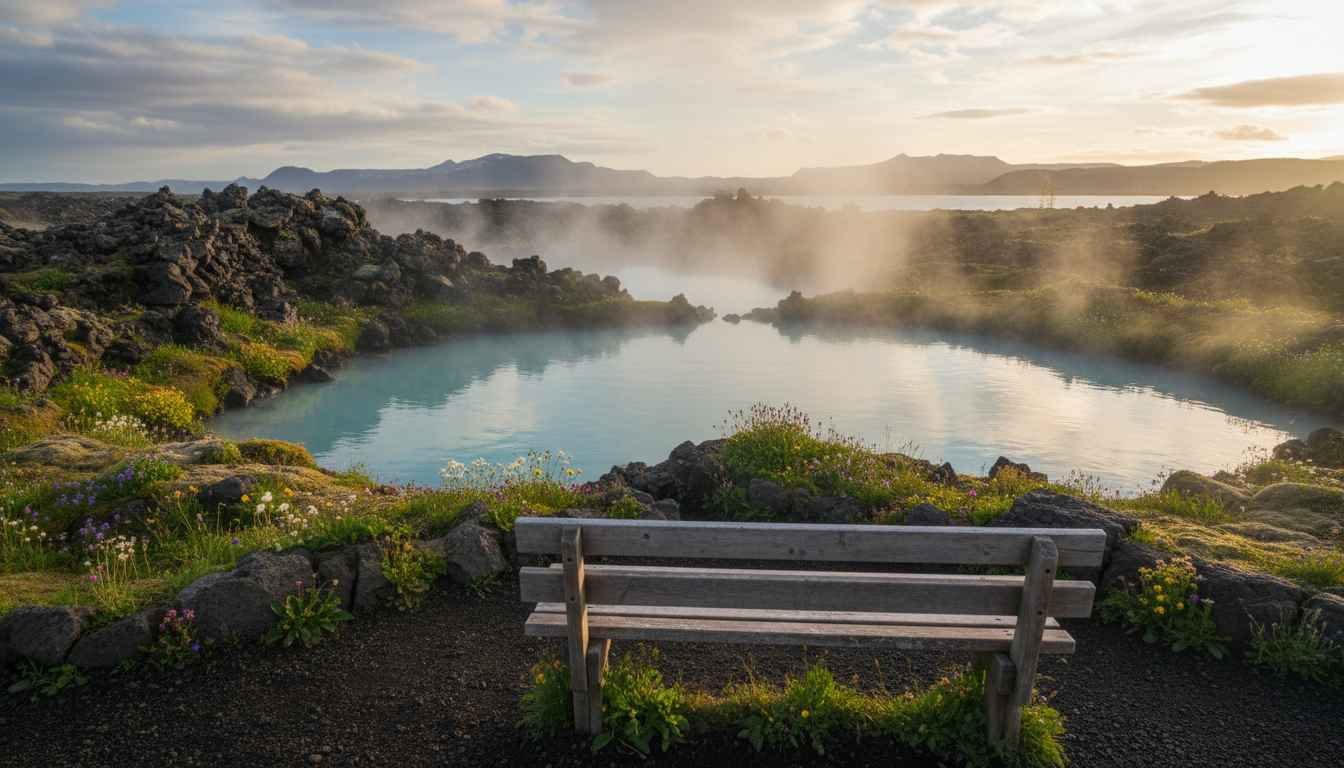
You picture the Blue Lagoon first: milky-blue water, steam rising into cold air, black lava rock all around. What surprises most visitors is how much else sits within a short drive of it. The lagoon lies on the Reykjanes Peninsula, one of Iceland’s most geologically restless corners, where you can walk between continents, watch steam vent from the earth, and be in the capital for dinner. Plan the lagoon as the centrepiece, not the whole trip.
The Reykjanes Peninsula: Volcanoes, Steam and Coast
The Reykjanes Peninsula is a UNESCO Global Geopark, and it earns the title. At Krysuvik, boardwalks cross a geothermal field of bubbling mud pots and steaming vents, with colours running from rust red to sulphur yellow. Nearby, the Gunnuhver hot springs steam beside the coast, and the Reykjanes Lighthouse stands over dramatic cliffs where the Atlantic meets black rock. The Bridge Between Continents, a small footbridge over a fissure, marks where the North American and Eurasian tectonic plates are pulling apart — a short stop, but a memorable one. Because the peninsula has seen volcanic activity in recent years, check current access and road information before setting out, as conditions and closures can change.
Lake Kleifarvatn and Grindavik
A short drive from the lagoon, Lake Kleifarvatn sits in a stark volcanic landscape, its dark water often still and mist-covered. Walking trails around the shore offer wide views and a sense of quiet that is hard to find at busier sights, and the lake pairs naturally with a visit to the Krysuvik geothermal area nearby. The fishing town of Grindavik, close to the lagoon, has traditionally been the area’s glimpse of everyday Icelandic coastal life, with its harbour, seafood restaurants and the Icelandic Saltfish Museum telling the story of the fishing industry. Given the town’s recent volcanic disruptions, check current visitor information before planning a stop there, and be ready to adjust your route if access is restricted.
Reykjavik and the Golden Circle
Reykjavik, the capital, is under an hour from the lagoon and makes an easy addition to the day. Its compact centre holds Hallgrimskirkja Church, whose tower gives a fine view over the city’s colourful roofs, the Harpa Concert Hall on the waterfront, and the National Museum of Iceland for the story of the island’s settlement. Restaurants, cafes and bookshops fill the streets between them, and the city is small enough to enjoy on foot. If you have a full extra day, the Golden Circle route — Thingvellir National Park, the Geysir geothermal area and Gullfoss waterfall — is a straightforward drive from the peninsula and covers three of Iceland’s most famous landscapes in one loop. For wider European trip ideas, best places to visit in Europe in summer and unique places to visit in Europe in winter offer seasonal context for fitting Iceland into a bigger journey.
Practical Tips for the Peninsula
A hire car is the easiest way to explore the Reykjanes Peninsula, since buses are infrequent outside the main routes and the sights are spread out. Roads are generally good, but weather can change quickly: wind, rain and low cloud are all normal, even in summer, so a waterproof layer and sturdy shoes belong in your bag whatever the forecast says. At geothermal sites, stay on marked boardwalks and paths — the ground can be unstable and the water dangerously hot away from them. For the lagoon itself, bring a swimsuit and leave valuables behind where possible; the lagoon provides facilities, but its timed entry means you should plan your peninsula route around your slot, not the other way round. Finally, daylight varies hugely by season: summer brings near-endless light for long evenings, while winter days are short, so plan driving accordingly.
FAQ
How far is the Blue Lagoon from Reykjavik? The drive is under an hour in normal conditions, and the lagoon also sits close to Keflavik International Airport, which makes it a convenient first or last stop.
Do I need to book the Blue Lagoon in advance? Yes, in practice. Entry is by timed ticket and popular times sell out, so book ahead and arrive at your slot rather than hoping for walk-in availability.
Is the area around the Blue Lagoon family-friendly? Yes, with care. The peninsula’s boardwalks and short trails suit families, though geothermal areas demand respect for fences and marked paths, and children should be supervised near hot water and steam vents.
Final Thoughts
The Blue Lagoon is worth the visit, but the peninsula around it is what turns a spa stop into a real Icelandic day. Steam fields, a dark volcanic lake, a lighthouse on the edge of the Atlantic and a small capital full of colour — all within an hour or so of each other. Book the lagoon, check current conditions, and give the rest of Reykjanes the time it deserves.