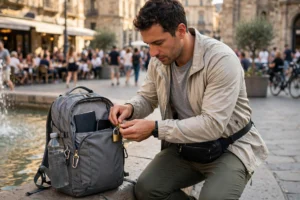
You step off the plane, walk to the baggage carousel, and watch bag after bag slide past. Yours never comes. The belt slows, then stops, and the hall empties around you. It is a frustrating moment, but it is also a fixable one. Most bags that go missing are not truly lost — they were loaded onto the wrong flight or left behind at the departure airport, and the airline usually finds them within a day or two. What matters now is doing the right things, in the right order, before you leave the terminal.
First, Do Not Leave the Airport Without Reporting It
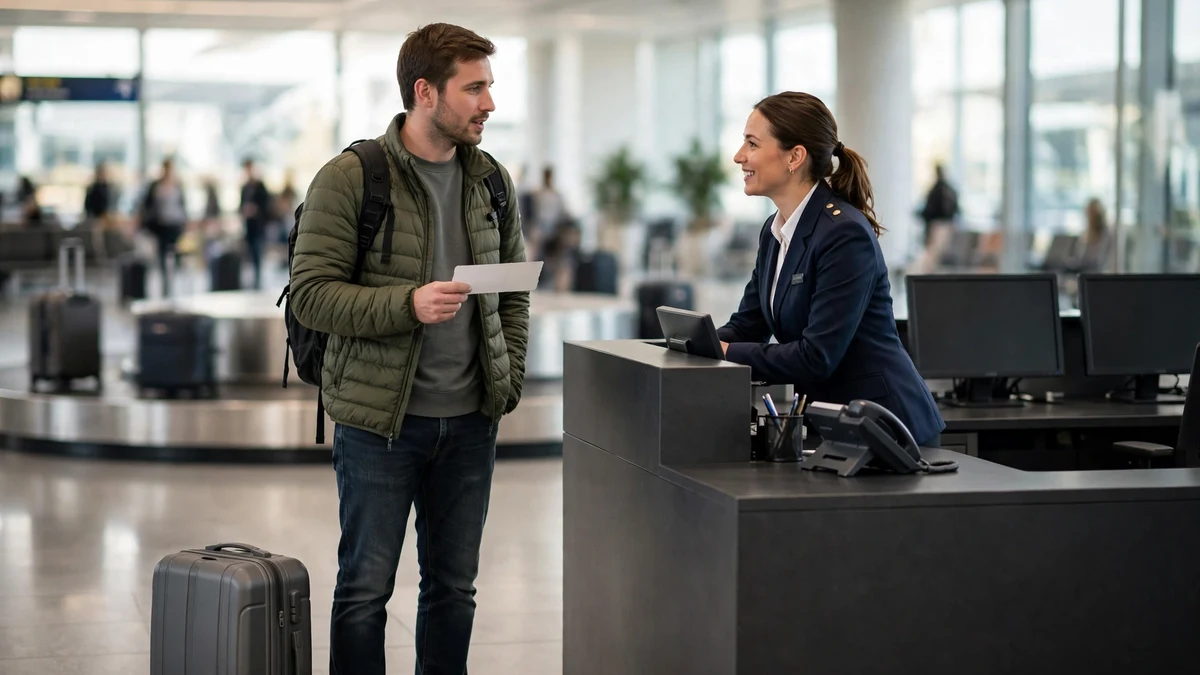
This is the rule everything else depends on. The moment you are sure your bag is not coming, go to the airline’s baggage service desk — it is usually right beside the carousels, or just outside customs in the arrivals hall. Do not go home and phone later. A report filed in person, on the spot, is processed faster and leaves no doubt about when and where the bag went missing.
At the desk, the agent will open a Property Irregularity Report, often called a PIR. You will be asked to describe your bag: its colour, brand, size, and anything that sets it apart, such as a ribbon, a sticker, or a distinctive luggage tag. If you have a photo of your bag on your phone, show it — a picture removes all guesswork. You will also give a delivery address, usually your hotel or home address, and a phone number where the airline can reach you.
Before you walk away, make sure you leave with three things: the report’s reference number, the name of the agent or office that took it, and a copy of the report itself. That reference number is your key to everything that follows — tracking, phone calls, and any claim.
Keep Your Boarding Pass and Baggage Tag
Your boarding pass and the small baggage-claim sticker — the one stuck to your ticket wallet or the back of your boarding pass at check-in — prove the airline accepted your bag. Do not throw either away. Put them in your phone case or your carry-on, next to the report reference number, so all your proof is in one place.
If you checked in online and have no paper boarding pass, a screenshot of your booking and the bag-tag number in the airline’s app will do.
Track Your Bag With the Reference Number
Most airlines let you follow a delayed bag online. Enter your reference number on the airline’s baggage-tracking page or in its app, and you will see updates as the bag is located and routed to you. Check it once or twice a day — the status changes when the bag is scanned at a new airport.
If there is no update after 24 hours, call the baggage office and quote your reference number. Ask directly whether the bag has been located and which flight it is booked onto. A short, calm call often gets you more detail than the tracking page shows.
Buy What You Need — and Keep Every Receipt
You still need clean clothes and toiletries while you wait, and airlines generally cover reasonable interim expenses for a delayed bag. Buy what you genuinely need for the next day or two: a change of clothes, underwear, toothpaste, a toothbrush, deodorant, and any medicine you cannot wait for. Keep every receipt, and keep the spending modest — a basic outfit is a reasonable expense; a designer wardrobe is not.
Policies differ between airlines, so ask the baggage desk what the airline covers and whether there is a daily limit. Whatever you spend, the receipts are what turn your purchases into a claim later, so photograph them too.
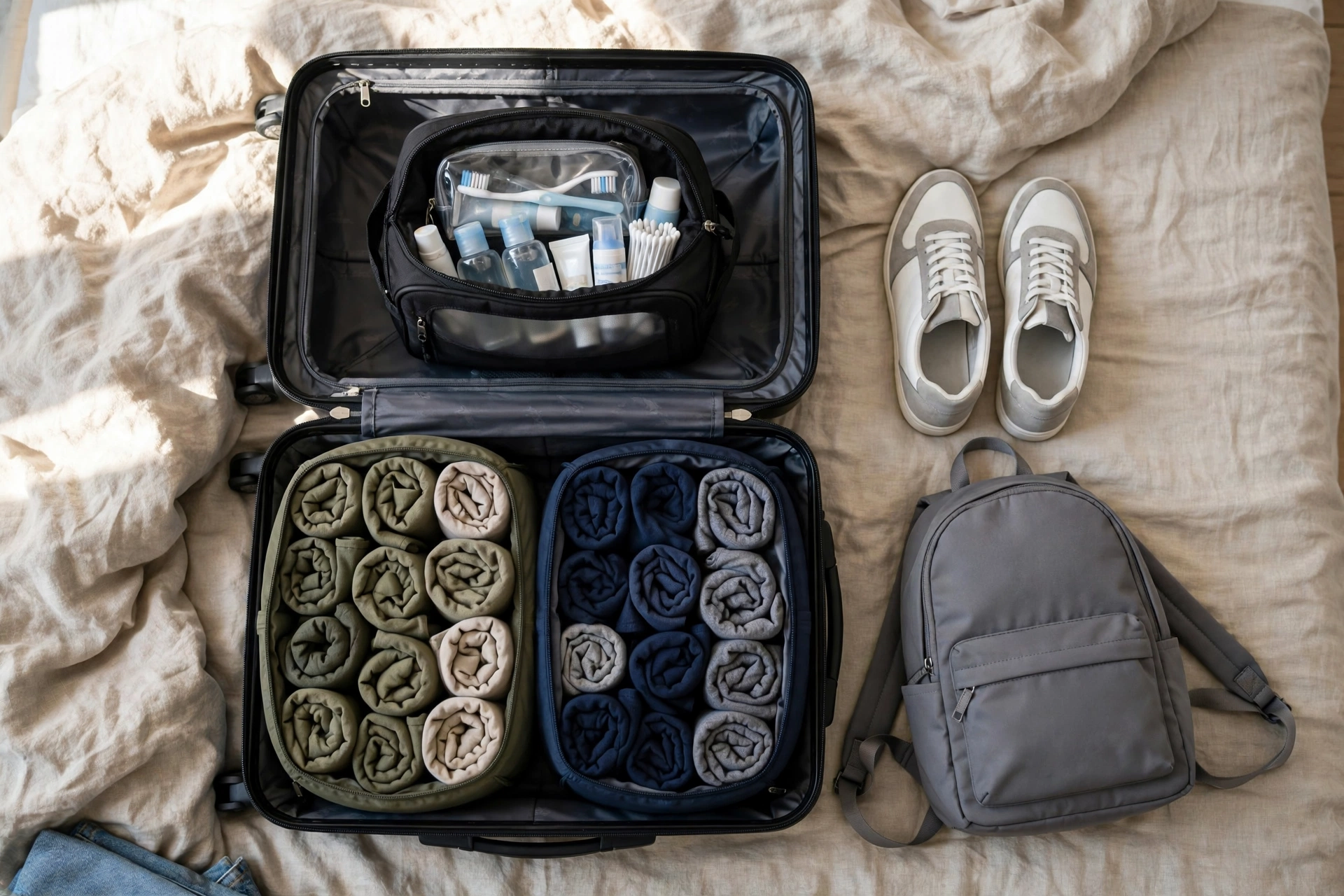
One habit that makes all of this easier is keeping the essentials in your carry-on in the first place. If you are packing a carry-on for a week-long trip, a spare set of clothes and your toiletries in the cabin bag mean a delayed suitcase is an inconvenience, not a crisis. The same goes for medicine: always carry it with you rather than checking it, as explained in our guide to travelling with medication safely abroad.
If Your Bag Does Not Turn Up
Most delayed bags arrive within a few days. But if yours is still missing after three weeks, the picture changes. On international flights covered by the Montreal Convention — which applies to most international air travel — a bag is generally treated as lost once 21 days have passed since it should have arrived. At that point, file a formal lost-baggage claim with the airline.
Your claim needs an itemised list of what was in the bag, with approximate values, and proof of value wherever you have it — receipts, order confirmations, or photos of the items. Be honest and realistic: list what was actually inside, not what you wish had been. Compensation limits vary by airline and route, so check the airline’s conditions of carriage for the limit that applies to your flight, and file the claim promptly — airlines set their own deadlines for claims, and a late claim is easy to refuse.
What If Your Bag Arrives Damaged or Opened?
Sometimes the bag comes back, but not in the state you left it. If you find a cracked shell, a broken wheel, a torn seam, or signs the bag was opened, report it at the baggage desk before you leave the airport, just as you would a missing bag. Take clear photos of the damage from several angles, and keep the damaged bag — the airline may want to inspect it or send it for repair.
For damaged baggage, airlines generally expect the report quickly, often within seven days of arrival on international flights, so do not put it off. File the damage claim with the photos and your baggage tag, and keep copies of everything you send.
How to Make Lost Luggage Less Likely Next Time
You cannot control every misrouted bag, but a few habits cut the odds sharply. Remove old luggage tags and stickers before every trip — a stale barcode can send your bag to the wrong destination. Make your bag easy to spot and describe: a bright strap, a colourful tag, or a distinctive ribbon helps both you and the baggage team.
Photograph your bag before you check it in, and take a quick photo of the contents as you pack. If the bag ever goes missing, that photo is the fastest way to describe it and to prove what was inside. Finally, leave enough time between connecting flights when you can — bags are most often left behind during very tight transfers.
FAQ: Lost Luggage at the Airport
How long does it take for lost luggage to be found?
Most delayed bags are located and delivered within one to three days. If a bag is still missing after 21 days on an international flight, it is generally treated as lost under the Montreal Convention, and you can file a full claim.
Will the airline deliver my bag to me?
In most cases, yes. Once your bag is found, the airline normally delivers it to the address you gave in your report — your hotel or your home — at no extra charge. If delivery is not offered, ask at the baggage desk what collection options are available.
Can I claim for things I had to buy while waiting?
Usually, yes, for reasonable essentials such as toiletries and a change of clothes. Keep every receipt, keep the spending modest, and submit the receipts with your claim, following the airline’s own process and deadlines.
Final Thoughts
A missing bag feels like a ruined trip, but in most cases it is a short delay with a clear fix. Report it before you leave the airport, keep your reference number and receipts safe, track the bag calmly, and buy only what you need while you wait. The travellers who get their bags back fastest are not the lucky ones — they are the ones who filed the report properly and followed up with the right paperwork in hand.