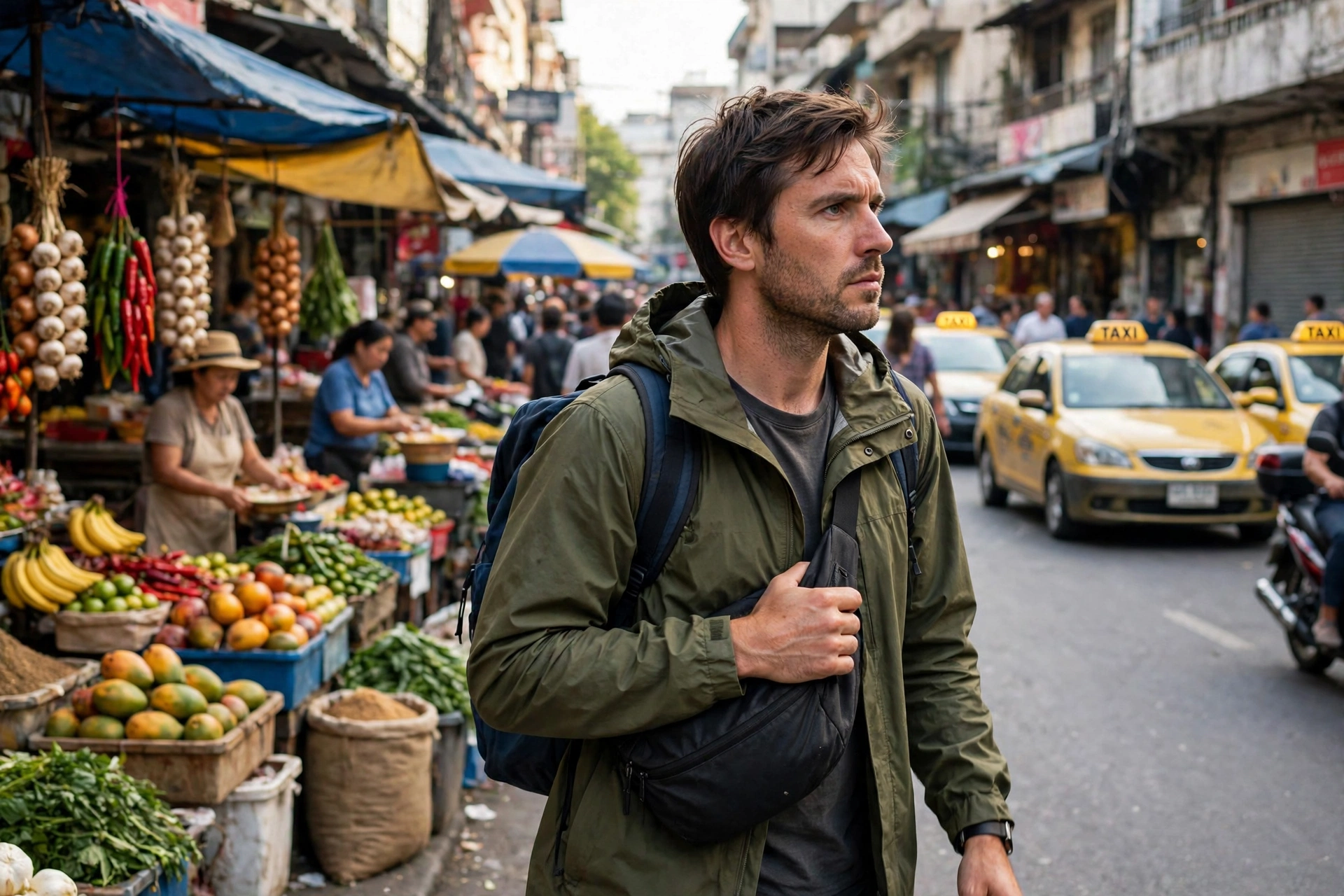
You are standing in a crowded night market when you reach for your phone and find the front pocket of your backpack open. Nothing is missing — this time. But that jolt of panic is one almost every backpacker knows. Keeping your valuables safe while backpacking is less about expensive gear and more about a few simple habits. This guide walks you through them, from packing at home to what to do if the worst happens.
The Golden Rule: Never Keep Everything in One Place
If there is one rule that matters more than any lock or bag, it is this: split your valuables up. Keep your main cash and one card in your wallet, a backup card and emergency cash somewhere else in your bag, and your passport locked away unless you need it. That way, a single bad moment — a stolen daypack or a snatched wallet — cannot take everything you own. Each morning, ask yourself: if this bag disappeared right now, what would I still have? If the answer is “nothing,” rearrange.
Before You Leave Home: Prepare Your Valuables
Most of the work happens before you board the plane. Make copies of your passport, visa, travel insurance, and both sides of your cards. Store digital copies where you can reach them from any device — a password-protected cloud folder works well — and leave a set with someone trusted at home. If your passport is lost, those copies make replacing it far faster.
Next, save your bank’s international helpline number and switch on transaction alerts for unusual spending. Only take what you genuinely need: leave expensive jewellery, extra cards, and anything of sentimental value at home — the less you carry, the less you can lose.
Finally, check what your travel insurance covers. Many policies cover theft but require a police report filed quickly, and they may cap payouts for electronics or cash. Read the fine print now — not after something goes missing — and save the insurer’s claims number on your phone.
Choose the Right Bag and Locks
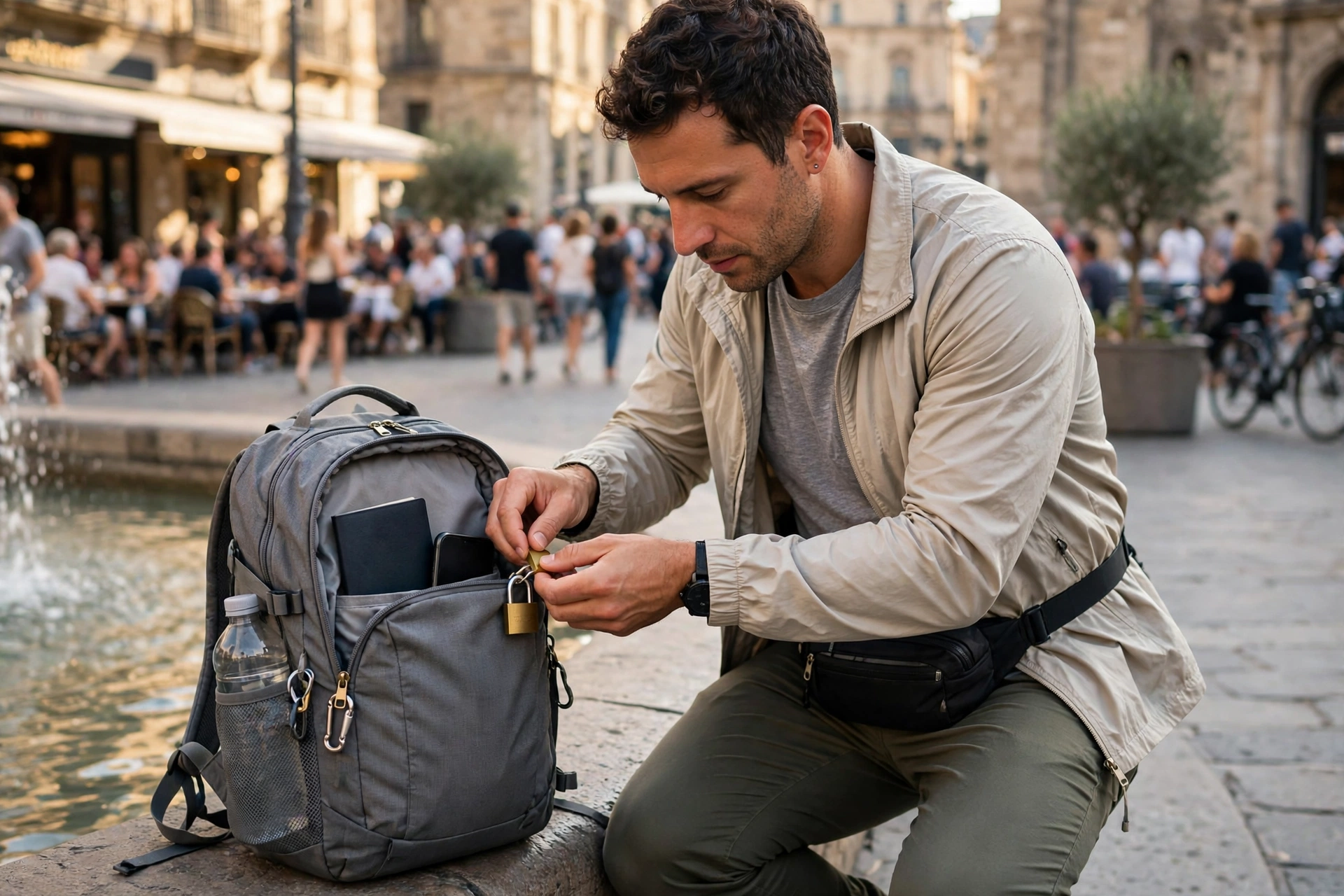
Your bag is your first line of defence, but it does not need to be expensive. Look for a backpack with lockable zippers — two zip pulls that a small padlock can join together — and a hidden pocket against your back for your passport or backup cash. Slash-resistant fabric is a bonus, not a requirement; no bag is theft-proof.
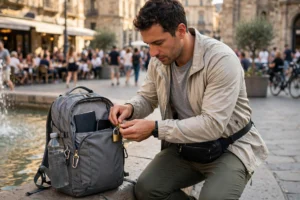
Carry two small locks: a combination padlock for your bag zips and hostel lockers, and a lightweight cable lock to fasten your pack to a bed frame or luggage rack on overnight trains and buses. Choose a combination lock over a keyed one — a lost key on the road is its own problem.
For day trips, use a small cross-body bag or daypack that zips shut and sits in front of you in crowds. A money belt or neck pouch is useful for your passport and backup cash, but it is not a wallet — keep daily spending money in an ordinary pocket so you are not reaching under your clothes in public. How you pack matters as much as what you pack — our guide on how to pack a carry-on for a week-long trip covers a system that keeps essentials reachable and valuables out of easy reach.
On the Move: Trains, Buses, and Crowded Streets
Transit is where most backpackers let their guard down. On a bus or train, keep your bag on your lap or between your feet with a strap looped around your leg — never on a rack you cannot see. On overnight journeys, clip your bag to your seat or bed with the cable lock and keep your phone, wallet, and passport on your person, not in the bag.
In crowded places — markets, metro stations, festival streets — wear your daypack in front of you and keep your phone in an inner or zipped pocket rather than a back pocket. Pickpockets rely on distraction, so stay alert when someone bumps into you or creates a sudden commotion nearby. Many tricks aimed at travellers follow familiar patterns; reading up on how to avoid tourist scams in a new city before you arrive will help you spot the common setups — including distraction routines designed to separate you from your bag.
At Your Stay: Hostels, Hotels, and Shared Rooms
Hostels are social and fun, but a shared dorm room means strangers have access to your things. Always use the locker if one is provided — and bring your own padlock, because front desks sometimes run out or charge for one. Lock away your passport, laptop, camera, and cash you do not need for the day, even if you are only stepping out for an hour.
In a private room, use the in-room safe for your passport and backup cash, and lock your bag when you leave. Avoid leaving expensive gear in plain sight — a laptop on the bed is an invitation, not a risk worth taking.
One more habit worth building: do a quick check every time you leave a room, a restaurant, or a train seat — phone, wallet, passport, keys. Ten seconds catches most “I left it behind” moments before they become lost-property problems.
Your Phone, Cards, and Cash: A Simple Daily System
A simple daily routine keeps your money and documents organised. Each morning, take out only what you need: a modest amount of local cash and one payment card. Leave the rest — your backup card, emergency cash, and passport — locked in your bag or the room safe.
Keep your backup card and emergency cash in a different place from your wallet, so losing one does not mean losing both. If you carry two cards from different banks, even better — a blocked card from one bank does not strand you.
Protect your phone like the valuable it is: set a strong passcode or biometric lock, switch on your device’s find-and-lock feature, and back up your photos regularly so a stolen phone does not also mean lost memories. When you need cash, use ATMs inside banks or shopping centres during the day, and put the money away before you walk off.
What to Do If Something Gets Stolen
Even careful travellers get unlucky. If it happens, stay calm and act quickly: cancel stolen cards through your bank’s app or helpline, then file a police report — you will need one for an insurance claim, and it is the first thing your embassy asks for if your passport is gone.
If your passport is stolen, contact your country’s nearest embassy or consulate as soon as you can, bringing your passport copies and the police report. Embassies can usually issue an emergency travel document within a day or two, though the process varies by country. This is where the copies you made before leaving home earn their keep.
If your phone is stolen, use another device to lock it remotely and change the passwords for your email, banking, and social accounts — a stolen phone can be a doorway into all of them. Then contact your travel insurer promptly and keep every receipt for replacements; insurers generally ask for the police report and proof of ownership, and delays can complicate a claim.
Frequently Asked Questions
Should I wear a money belt all day?
No. Use it for documents and backup cash you rarely need — your passport, an emergency banknote, a spare card. For daily spending, use an ordinary wallet or front pocket; reaching under your clothes in public tells everyone where your valuables are.
Is a hostel locker safe enough?
Yes, if you bring your own padlock and use it. Most hostel theft is opportunistic — someone grabbing an unlocked bag in a dorm. A locked locker removes that opportunity.
Should I carry my passport everywhere?
It depends on the country. Some places legally require visitors to carry ID; in others a photocopy is fine and the original is safer locked up. Check the local rule when you arrive — when in doubt, carry a copy and keep the original in your room safe.
Final Thoughts
Keeping your valuables safe while backpacking comes down to preparation, separation, and attention. Prepare before you leave, split your cash, cards, and documents so no single loss takes everything, and stay alert in crowds and on transit. Pack smart, stay aware, and the road will take care of the rest.