You buy a bright bunch of parsley on Saturday, full of plans for the week. By Tuesday the leaves are limp, by Thursday they are slimy, and half the bunch goes in the bin. Stored the right way, a bunch can stay bright and usable for one to three weeks instead of three or four days — the trick is that different herbs want different storage, and once you know which group yours belongs to, the rest takes two minutes.
Why Fresh Herbs Wilt So Fast
A fresh herb bunch is mostly water held inside thin leaves and soft stems. Once it is cut, nothing replaces that water, so the leaves dry out and droop. The bag it came in makes things worse: it traps damp air against the leaves, which speeds up slime and mould, while the stems sit dry at the bottom, which is why a bunch left loose in the crisper drawer is usually finished in three or four days.
First, Sort Your Herbs: Soft vs. Woody
Before you store anything, sort the bunch by stem. Herbs fall into two groups, and each group wants different treatment — get the group right and almost everything else follows.
Soft herbs have tender stems and delicate leaves that wilt quickly: parsley, cilantro, mint, dill, chives, and tarragon. Treat them like cut flowers: they drink through their stems, so they need water.
Woody herbs have tough, fibrous stems and firmer leaves: rosemary, thyme, sage, oregano, and marjoram. These barely drink through their stems, so standing them in water does little — they want gentle, steady humidity instead. Basil is the odd one out: a soft stem that hates the cold, so it gets its own rule below.
How to Store Soft Herbs in Water
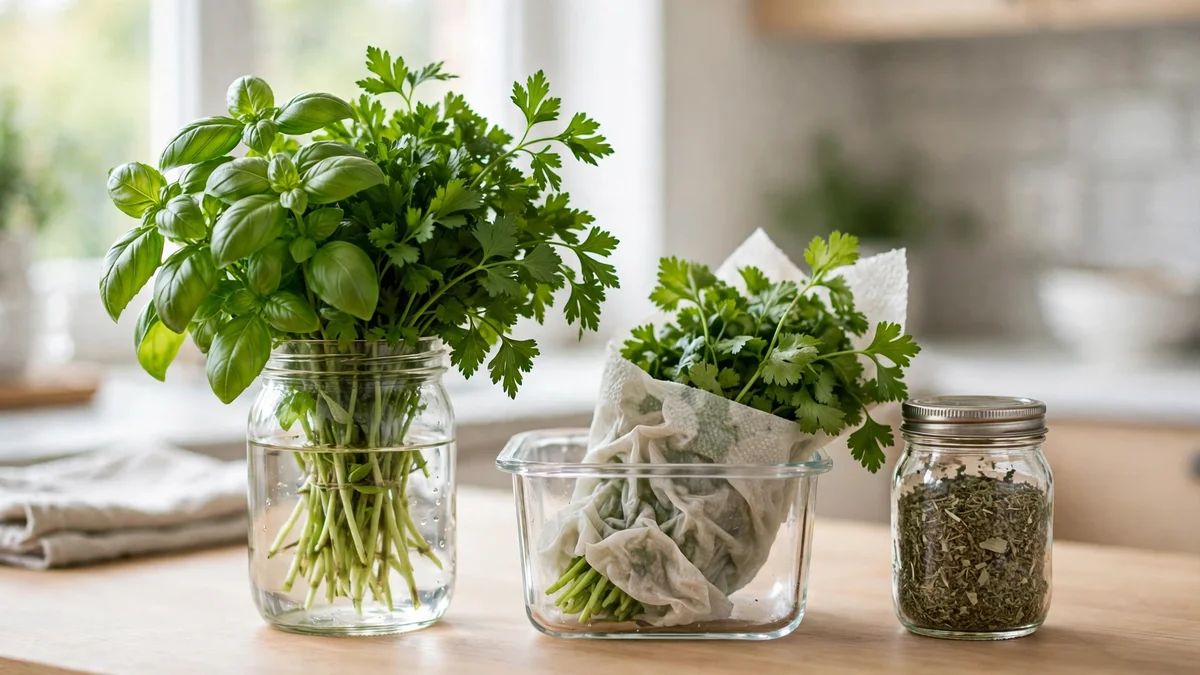
This is the most useful herb-storage method there is, and it works for parsley, cilantro, mint, dill, and tarragon — think of the bunch as a small bouquet.
- Trim the stems. Cut about half an inch off the bottom with sharp scissors, as with fresh flowers.
- Wash gently. Rinse under cool water, shake off the excess, and pat the leaves dry — leaves left soaking wet are the first to turn slimy.
- Stand them in a jar. Fill a glass or jar with an inch or two of cool water and stand the bunch upright, stems down, leaves above the rim.
- Cover loosely. Drape a plastic bag loosely over the leaves to keep dry fridge air from pulling moisture out of them; do not seal it tight.
- Refresh the water. Keep the jar in the fridge and change the water every two or three days, or as soon as it looks cloudy — cloudy water means bacteria are growing.
Stored this way, parsley and mint commonly stay fresh for one to two weeks, and cilantro — the most fragile of the group — often lasts a week or two instead of the three or four days it survives in its shop bag. The Kitchn’s guide to storing fresh herbs gives the same method.
The Basil Exception: Keep It on the Counter
Basil looks like a soft herb, but it is a warm-weather plant, and cold damages it: below about 50°F (10°C), its leaves bruise and turn black, so a fridge can ruin a bunch within a day or two. Keep basil on the counter instead: trim the stems, stand the bunch in a jar of water out of direct sunlight, and change the water every couple of days. Stored this way, basil keeps for several days to a week, far longer than the blackened mess a fridge produces.
How to Store Woody Herbs in a Damp Towel
Rosemary, thyme, sage, and oregano do not need a jar — their stems drink so little water that standing them in one changes almost nothing, and too much moisture around their leaves invites mould. What they need is steady, gentle humidity.
- Rinse and dry. Wash the sprigs under cool water and pat them dry — damp, not dripping.
- Roll them in a damp towel. Lay the sprigs on a clean paper towel, dampen it lightly, and roll it up loosely, like a burrito — the towel holds just enough moisture against the leaves.
- Bag it and chill it. Tuck the roll into a resealable bag or an airtight container in the crisper drawer — the bag keeps dry fridge air and excess oxygen away from the leaves.
- Rewet as needed. Check the towel every few days and rewet it when it dries out.
Woody herbs stored this way commonly last two to three weeks — rosemary and thyme are the hardiest, sage and oregano a little more delicate but still good for over a week.
Freezing Herbs You Cannot Use in Time
Sometimes a bunch is simply too big to finish fresh. Chop the leaves, pack them into an ice cube tray, and cover them with water or olive oil. Freeze until solid, then pop the cubes into a labelled bag. Drop a cube straight into a soup or sauce — no thawing needed. Frozen this way, herbs keep for months, up to about a year. The texture changes, so frozen herbs are for cooking rather than garnishing, but their flavour holds up well.
Drying Woody Herbs for the Pantry
Woody herbs dry better than soft ones, because their thicker leaves hold their flavour oils. Tie small bundles of stems together and hang them upside down somewhere dry and out of direct light. In about one to two weeks the leaves will feel crisp and crumble when rubbed between your fingers — that is the test. If they only bend, they are not dry yet, and jarring them now will trap moisture and grow mould. Once dry, strip the leaves into a clean, airtight jar in a cool, dark cupboard. Dried this way, woody herbs keep for a year or more. Soft herbs dry poorly, so freeze those instead.
Mistakes That Make Herbs Go Bad Faster
Storing them wet. Leaves left dripping after washing rot first — shake and pat herbs dry before they go into a jar, towel, or bag.
Leaving them in the shop bag. The thin bag herbs come in traps damp air and crushes the leaves. Move them into proper storage the day you buy them — two minutes of work that doubles their life.
Forgetting the water. A jar left unchanged for a week turns cloudy and slimy, and the stems rot from the bottom up. Change the water every two or three days without fail.
Buying more than you can use. A giant bunch is only a bargain if you finish it. Buy what you will use in a week or two, and freeze the rest on day one rather than on day six, when it is already fading. Cooking at home with herbs you kept fresh is one of the cheapest ways to eat well — the same thinking helps on the road, where finding cheap eats near tourist attractions keeps a travel food budget in check.
Refrigerating basil. Basil in the fridge turns black. Counter, jar, water — that is the whole method.
FAQ
How long do fresh herbs last in the fridge?
Soft herbs in a jar of water usually last one to two weeks; woody herbs in a damp towel last two to three weeks. Basil is the exception: several days to a week on the counter.
Should you wash herbs before storing them?
Yes — a gentle rinse under cool water removes soil and grit, but dry them well afterwards. Wet leaves rot faster than dirty ones.
Can you freeze fresh herbs?
Yes, and for a surplus bunch it is the best option. Chop soft herbs into an ice cube tray, cover with water or olive oil, and freeze; use the cubes straight from the freezer in cooking.
Final Thoughts
Storing fresh herbs is a sorting habit: soft herbs in a jar of water in the fridge, basil in a jar of water on the counter, woody herbs rolled in a damp towel. Change the water, rewet the towel, freeze whatever you cannot finish — and the bunch you buy on Saturday will still be bright when Friday’s dinner comes around.