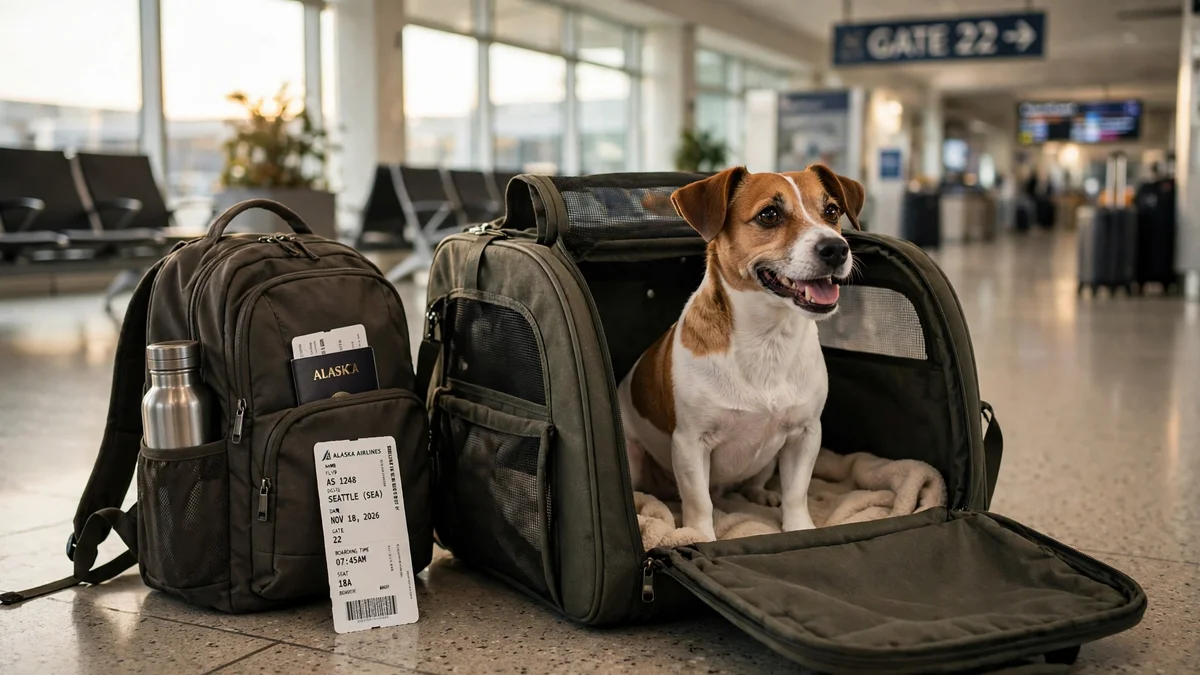
Picture this: you are standing at your departure gate, boarding pass in one hand, and your dog is peeking out of a soft-sided carrier at your feet, calm and curious instead of panicked. That is the goal, and it is entirely possible. Flying with a dog takes more planning than flying alone, but once you know the rules for carriers, paperwork, and security, the trip becomes straightforward. Here is every step, from booking to landing.
Can Your Dog Fly in the Cabin With You?
For most travellers, the cabin is the best option — your dog stays with you the whole flight. But it only works for small dogs. Your dog must fit inside a carrier that slides under the seat in front of you, with room to stand, turn around, and lie down inside the closed carrier. Most US airlines cap the combined weight of dog and carrier at around 20 pounds (about 9 kg).
If your dog is too large for the cabin, it will usually travel in the cargo hold in an airline-approved crate. Trained service dogs are the exception and fly in the cabin free, without a carrier. Also check the breed: flat-faced breeds such as bulldogs, pugs, and French bulldogs are often banned from cargo holds because of breathing risks at altitude. For them the cabin is usually the only safe way to fly — and if the dog is too big for the cabin, driving may be better.
Book Your Dog’s Spot Early
Airlines limit how many pets can fly on each aircraft, and cabin pet spaces sell out. As soon as you have your own ticket, call the airline or add the pet to your booking online, and confirm the pet is reserved on every flight — connecting flights may have different rules. Expect a pet fee on top of your own ticket: on US airlines it is often $95 to $200 each way, though it varies by airline and route, so confirm the exact fee when you book. Book a direct flight when you can: fewer takeoffs and landings mean less stress, and no missed connection to worry about.
Choose a Carrier That Fits Your Dog and Your Airline
The carrier is the single most important piece of gear for the trip, and airlines are strict about it. Soft-sided carriers are the usual choice for cabin travel because they flex slightly to fit under the seat. As a guide, American Airlines allows soft-sided carriers up to 18 x 11 x 11 inches, and Delta and United publish the same maximum — but every airline sets its own limit, so check your airline’s published dimensions, for example on American Airlines’ pet travel page.
Before you buy, measure your dog and test the carrier at home. Your dog should be able to stand, turn, and lie down without its back pressing against the top. Look for mesh ventilation on at least two sides, a leak-proof base, and sturdy zippers. On most airlines the carrier counts as your personal item or carry-on.
Visit the Vet and Sort the Paperwork
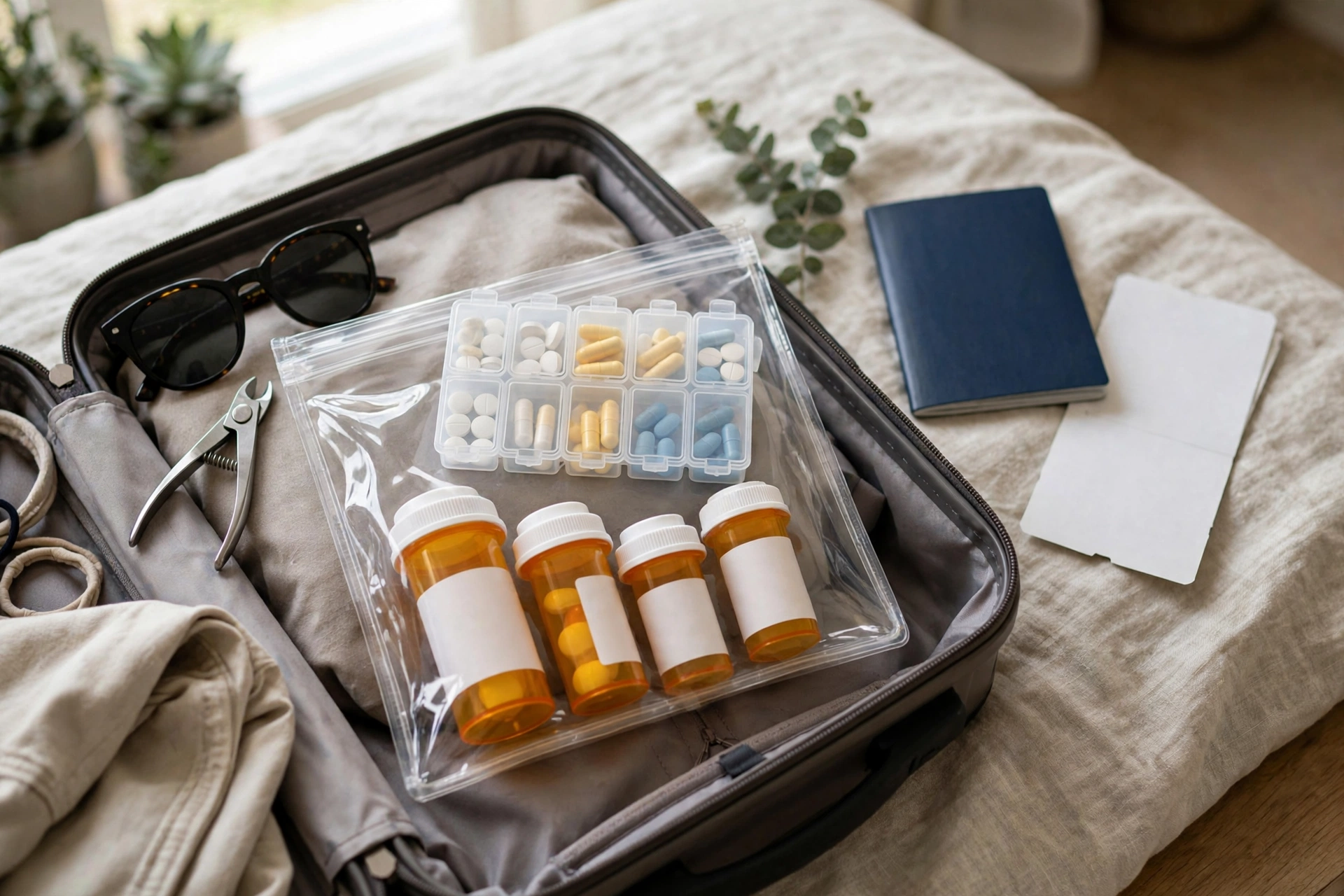
Book a vet appointment a few weeks before departure, and bring your flight details. For many flights, airlines require a health certificate issued by a vet within 10 days of travel, and international trips almost always require one. Your vet will also confirm that rabies and other vaccinations are up to date. If your dog takes regular medication, keep it in your carry-on bag, not in checked luggage — see our guide to travelling with medication safely abroad.
International travel adds more paperwork, and the rules belong to the destination country, not the airline. Some countries require a microchip, a rabies blood test, or a waiting period after vaccination. Dogs entering the United States need a CDC Dog Import Form receipt, a requirement in place since August 2024. Hawaii has its own strict microchip and waiting-period rules. Start this research at least a month ahead — a missed document can mean your dog is refused boarding.
Get Your Dog Comfortable With the Carrier
A dog that meets its carrier for the first time at the airport will be stressed before the flight even starts. Start at least two weeks ahead. Leave the carrier open in your living room with a familiar blanket inside, and let your dog explore it on its own terms. Feed treats and a few meals inside it, then close the door for a few minutes at a time and gradually build up to an hour. Take a few practice trips: a short car ride in the carrier, or a walk through a busy place. The goal is for the carrier to feel like a safe den, not a trap. On travel day, put a blanket or toy that smells like home inside.
Pack Your Dog’s Travel Kit
Pack everything your dog will need in your carry-on, because checked luggage is out of reach for the whole journey. The kit is simple: a day’s worth of food in a sealed bag, a collapsible water bowl and a bottle of water, a leash and harness, waste bags, a favourite toy or chew, an absorbent pad for the carrier, and any medication. Add a copy of the health certificate and vaccination records in a plastic sleeve. Our guide to packing a carry-on for a week-long trip shows how to organise a single bag so the essentials are always on top.
At the Airport: Security and Boarding
Arrive early — an extra 30 to 45 minutes covers check-in, security, and a last toilet break. At check-in, the airline will usually weigh your dog in its carrier and check the paperwork, so have the health certificate and booking confirmation ready.
Security is simpler than it looks. At US checkpoints, the Transportation Security Administration (TSA) requires you to take your dog out of the carrier just before screening. The empty carrier goes on the belt through the X-ray machine, and you carry your dog through the walk-through metal detector in your arms, or walk it through on a leash. Never put your dog through the X-ray tunnel — the machine is for luggage only. Put a harness and leash on before you reach the line. If your dog is skittish, you can ask an officer for screening in a private room. Once you are through security, find the pet relief area — most larger airports have one past security.
On the Plane
Once you board, slide the carrier under the seat in front of you and keep it closed for the entire flight. Do not open the top for a cuddle at cruising altitude: a loose dog in a cabin is a safety problem.
Do not feed your dog a full meal right before the flight, and avoid sedatives. The American Veterinary Medical Association recommends against sedating pets for air travel, and several airlines will not accept a sedated animal, because sedation can affect breathing and balance at altitude. If your vet has prescribed something specific for anxiety, follow that advice exactly — but never sedate your dog on your own initiative. A familiar blanket, a chew toy, and your calm voice through the mesh are usually enough. Offer small sips of water on longer flights, and stay relaxed yourself — your dog reads your tension more than the engine noise.
After You Land
Head straight for the nearest pet relief area, then offer water and a small snack. A little extra sleepiness after a first flight is normal and passes within a day. If your dog vomits, refuses food and water for more than a day, or seems in pain, call a local vet.
FAQ: Flying With a Dog
How much does it cost to fly with a dog? It depends on the airline and route — in-cabin fees are far lower than cargo transport. Confirm the exact fee, and what it covers, when you book.
Can my dog sit on my lap during the flight? No. Pet dogs must stay inside their carrier under the seat for the whole flight. Only fully trained service dogs are allowed to ride outside a carrier in the cabin.
Final Thoughts
Flying with a dog is mostly a planning exercise. Pick the right way for your dog to travel, book early, get a carrier that actually fits, sort the vet paperwork with time to spare, and practise at home so the carrier feels safe. Do those five things and the trip will go smoothly for both of you.