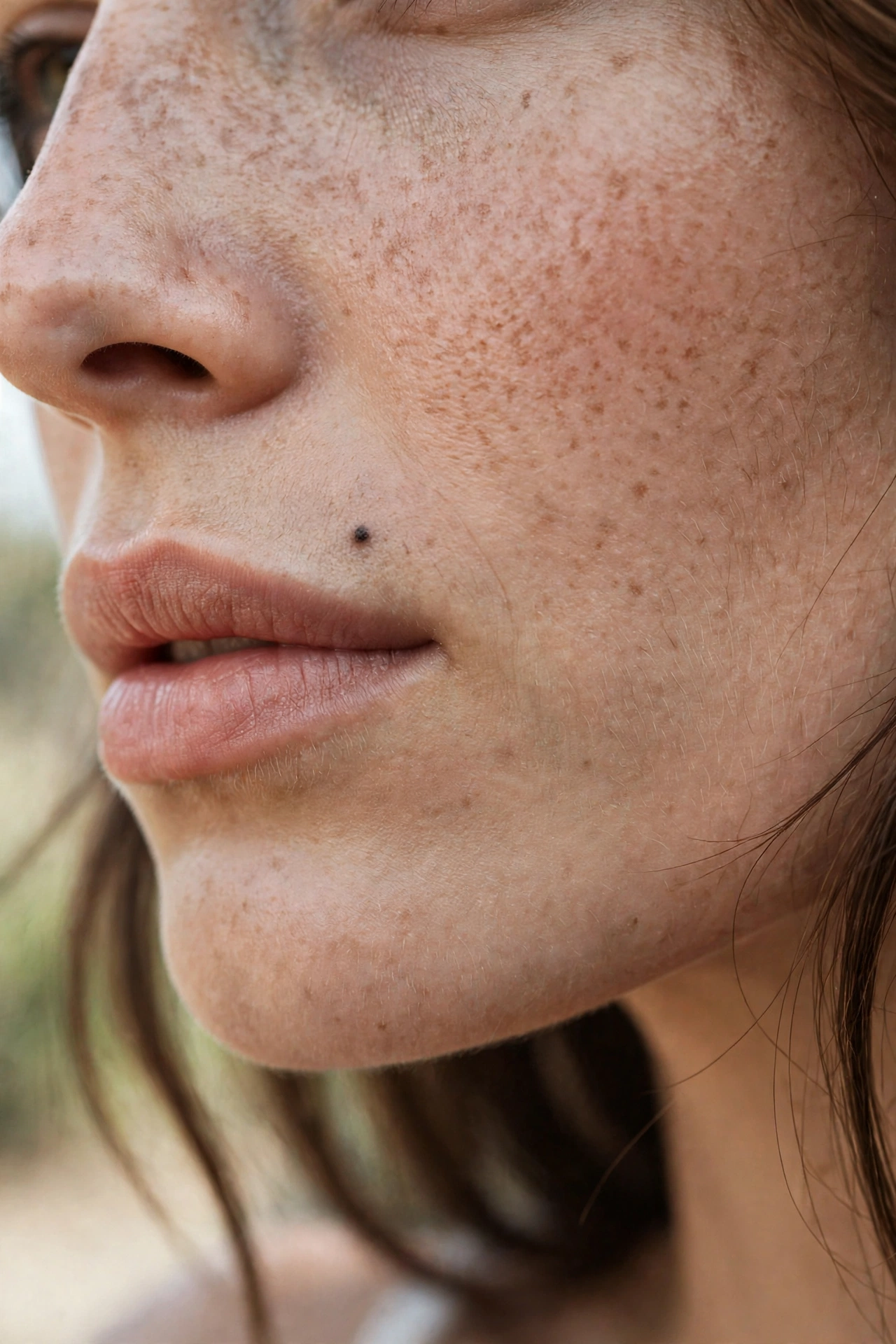
Picture the classic beauty mark: a small dark dot above the lip, the kind Marilyn Monroe and Cindy Crawford made famous. A tattoo beauty mark recreates that look permanently — a tiny dot of ink, placed with precision, that stays put where makeup would wash off.
This guide explains what a tattoo beauty mark is, why people choose one, where it is usually placed, what the process and aftercare involve, and the risks worth knowing before you book.
What is a tattoo beauty mark?
A tattoo beauty mark is a small, deliberately placed tattoo that imitates a natural mole. The artist uses a fine needle and a small amount of dark ink — usually black or a deep brown matched to your skin tone — to create a dot a few millimetres across. The result should look like a mole you were born with, not like a drawn-on spot.
Beauty marks have long been seen as a mark of elegance, and the tattoo version appeals to people who like the look but were not born with one. Unlike a pencilled-on mark, it does not smudge, fade in the rain or need reapplying every morning.
Why do people choose a tattoo beauty mark?
The main reason is simple: it is a small, low-commitment way to change how your face looks. A beauty mark can draw attention to the lips or the eyes, add a focal point to the cheek, or simply give your face a feature that feels like yours. For many people it is about confidence — a tiny detail that makes their reflection feel more like themselves.
The permanence is part of the appeal. There is no daily routine, no product to buy, and no worry about it wearing off during the day. But permanence is also the reason to think carefully first: a tattoo beauty mark is a decision that lasts for years, even if it fades over time.
Choosing the right placement
Placement is everything with a beauty mark, because a few millimetres can change the effect entirely. The most popular spots are the cheek, just above the lip, and near the corner of the eye. A mark on the cheek can balance the proportions of the face; one above the lip draws attention to the mouth; one near the eye emphasises the gaze.
Ask your artist to draw the mark on with a cosmetic pencil first and live with it for a day or two before committing. Take photos in different light, try it with and without makeup, and check how it looks when you smile. What looks perfect in the mirror at the studio can sit differently on a moving face.
What to expect during the process
A tattoo beauty mark is one of the quickest tattoos you can get — the tattooing itself usually takes only a few minutes. The appointment starts with a consultation: you and the artist agree the size, shade and exact spot, and the artist marks it on your skin so you can approve it before any needle touches you.
The artist then cleans the area and tattoos the dot with a fine needle. Most people describe the feeling as a brief sting rather than real pain, because the area is small and the work is fast. Afterwards the artist cleans the area and applies a thin layer of ointment. Choose an artist who specialises in fine-line or cosmetic tattooing, and check their portfolio for healed work — not just fresh photos, which always look sharper than the settled result.
Aftercare: keeping it looking fresh
Aftercare decides how well your beauty mark heals. For the first few days, keep the area clean and dry, and avoid picking at any scabbing — picking can pull ink out and leave a patchy mark. Use a thin layer of the ointment your artist recommends, and avoid swimming pools, saunas and heavy sweating while the skin heals.
Sun exposure is the biggest enemy of a small tattoo. UV light fades ink, and a beauty mark is so small that fading shows quickly. Use sunscreen on the area once it has healed, and expect a touch-up after a few years if the mark softens. If you notice unusual redness, swelling or discharge, contact your artist or a doctor promptly rather than waiting it out.
Risks and things to consider first
A tattoo beauty mark is a real tattoo, and it carries the same risks as any tattoo, even if it is tiny. Allergic reactions to ink are uncommon but possible, and infection is a risk if the studio’s hygiene is poor or the aftercare is neglected. Fading is almost guaranteed over time, especially on the face, where sun exposure is constant.
Removal is also harder than most people expect. Laser removal works, but it takes several sessions, costs far more than the original tattoo, and can leave scarring or pigment changes on the face. Think of a tattoo beauty mark as semi-permanent in practice, not easily reversible. If you are unsure, try a temporary version first — a well-applied cosmetic pencil mark, worn for a few weeks, tells you more about whether you like the look than any amount of imagining will.
Check the rules where you live, too. Some places require cosmetic tattoo artists to hold a specific licence, and a reputable studio will be happy to show you its credentials, its hygiene practices and its consent forms. If a studio cannot answer basic questions about sterilisation and ink, walk away.
Tattoo beauty marks vs natural marks and makeup
A natural beauty mark is a mole, and a tattooed one is ink — the difference matters if you ever need a skin check, because a tattoo can make it harder for a dermatologist to assess the skin underneath. Mention it at skin appointments so it is not mistaken for a changing mole.
Compared with makeup, a tattoo wins on convenience and loses on flexibility: you cannot move it, change its size or remove it for a job interview. Compared with a natural mark, it wins on control — you choose the exact spot — and loses on reversibility. That trade-off is the whole decision in one sentence, and it is worth sitting with before you book.
For more on beauty routines and products, see our honest overview of the Chandos Beauty Rose rose skincare range, and our guide to the black beauty drug trend in beauty products.
FAQ: Tattoo beauty marks
- How long does a tattoo beauty mark last?
It is permanent, but it will fade over time — especially on the face, where sun exposure is constant. Most people need a touch-up after a few years to keep it looking sharp.
- Does a tattoo beauty mark hurt?
Most people describe it as a brief sting. The tattoo is tiny and the work takes only a few minutes, so discomfort is usually minimal.
- Can a tattoo beauty mark be removed?
Yes, with laser removal, but it takes several sessions, costs much more than the original tattoo, and can leave scarring or pigment changes on the face. Treat it as a long-term decision.
- How do I choose a good artist?
Look for an artist who specialises in fine-line or cosmetic tattooing, check healed work in their portfolio, confirm the studio’s licence and hygiene practices, and ask them to draw the mark on first so you can live with it before committing.
Final Thoughts
A tattoo beauty mark is a small decision with a long shadow: a few millimetres of ink that changes your face for years. Done well, by a skilled artist, in the right spot, it is a subtle and elegant addition. Done hastily, it is a regret you will pay to remove. Try the look with makeup first, choose your artist carefully, and only commit when you are sure the mark is one you will still like in five years.