Picture this: you own a flat in a block of twelve, and a storm tears tiles off the shared roof. Water runs down through three flats, the lift stops working, and the hallway ceiling collapses. Whose insurance pays for the roof, the lift, the hallway — and the flats below? The answer, in most leasehold blocks, is one policy that covers the whole building. That policy is block insurance, and if you own, manage, or live in a block of flats, it is the single most important piece of cover attached to your home.
This guide explains what block insurance is, what it covers, who arranges it, what it does not cover, and what to check before a policy is renewed. It focuses on the UK leasehold system, where the term is used most — the arrangements differ in other countries, so check your own lease and local rules if your block is elsewhere.
What Is Block Insurance?
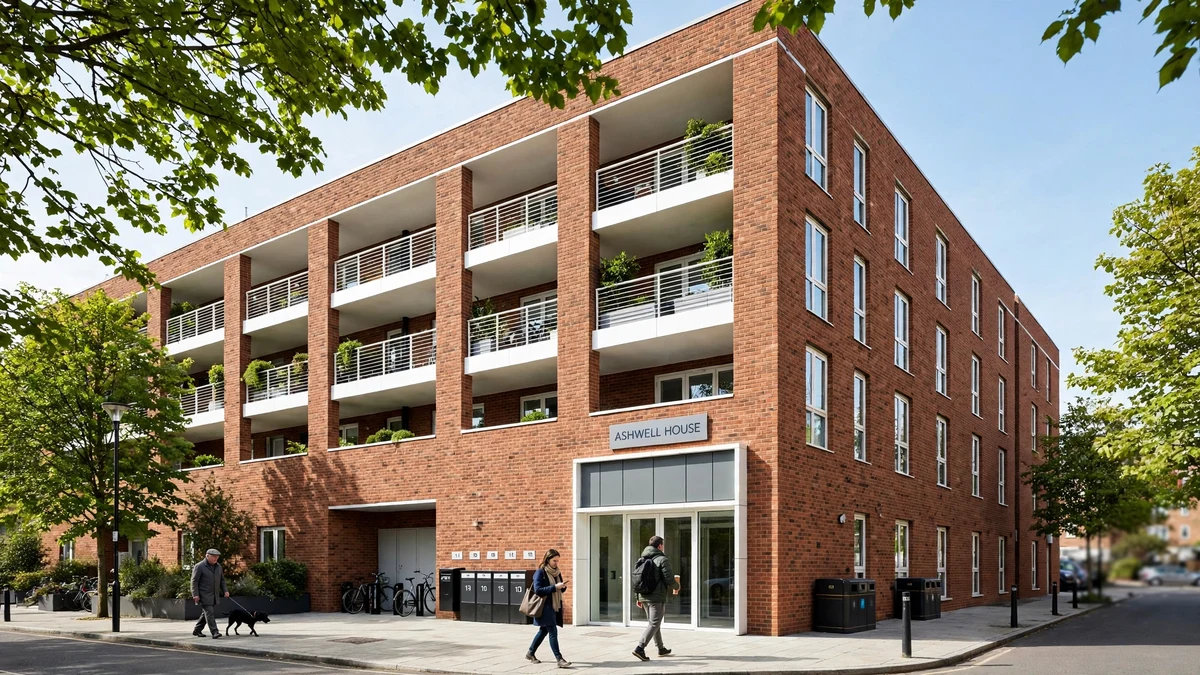
Block insurance — also called block of flats insurance, or a block policy — is one buildings insurance policy for a whole block of flats, rather than one policy per flat. It covers the structure, the roof, the shared parts and the services that run through them, and it is taken out by whoever the leases make responsible for insuring the building. That is usually the freeholder, a residents’ management company (RMC), or a right to manage (RTM) company, often through a managing agent. The premium is recovered from the leaseholders through the service charge.
The key point is that a block is insured as one building, not as a collection of separate homes. A standard landlord policy is written for one dwelling on its own title. A block has things a single let does not: a shared roof, a shared staircase, shared services, and several separate tenancies inside one structure. Insurers underwrite that as a different risk, and the product is usually sold as a block of flats policy, a property owners’ policy, or a commercial property policy depending on the size of the building and who is selling it.
If you own one leasehold flat in a block and let it out, the building is almost certainly insured by someone else. You would still need cover for your own contents, your liability as a landlord, and — if you want them — rent guarantee and legal expenses. The block policy is not a substitute for those.
What Does Block Insurance Cover?
Policies differ, so always read the wording rather than relying on a summary, but these are the sections a block owner should expect to see — and should ask about if they are missing.
Buildings cover. The structure, the roof, the fixed fittings in every flat (kitchens, bathrooms, boilers), and the common parts — hallways, stairs, lifts, bin stores, boundary walls. It usually responds to fire, storm, flood, escape of water, subsidence, impact, theft and malicious damage, with accidental damage as an option. For a fuller breakdown of the standard sections, see Deacon’s guide to blocks of flats insurance.
Property owners’ liability. Your legal liability if someone is injured, or their property is damaged, because of the building or its common parts — a loose stair rail, a slate off the roof, a flooded hallway. Typical liability limits on block policies run from £2 million to £10 million, depending on the building and the insurer. Liability cover is a standard part of many policies — our guide to liability insurance for RBTs shows how a liability policy responds when someone is hurt, even though that guide is written for professionals rather than property owners.
Loss of rent and alternative accommodation. If the flats cannot be lived in after insured damage, this pays the rent or service-charge income lost, and the rehousing costs, while the building cannot be lived in. Check the indemnity period — the number of months the cover runs for — because a long rebuild can outlast a short one.
Legal expenses. Cover for legal costs in disputes with tenants, neighbouring property owners, or other third parties.
Optional sections worth asking about include terrorism cover, engineering cover for lifts and communal boilers, and cover for communal contents such as furniture in shared lounges.
What Block Insurance Does Not Cover
A block policy does not cover each leaseholder’s own contents. Flat owners and tenants insure their own belongings separately. It also does not cover wear and tear, gradual deterioration, or damage that was already there before the policy started. Damage caused by a leaseholder’s own alterations — for example, a bathroom refit that leaks into the flat below — may fall to the leaseholder who did the work, not the block policy, depending on the wording and the lease.
This is where most confusion arises. If your ceiling is stained by a leak from the flat above, the block policy may pay for the building fabric, but your damaged furniture and redecoration are usually a contents claim. Check both policies before assuming either one will pay.
The Sum Insured: Rebuild Cost, Not Market Value
The single most important figure on a block policy is the sum insured — and it is the cost of clearing the site and rebuilding the building to its current standard, including professional fees, site clearance, and complying with current building regulations. It is not the market value of the flats, and it is not what the building would sell for. A block in a high-value area can easily be underinsured if someone sets the sum insured by looking at sale prices, and overinsured if the figure is never reviewed as building costs rise.
That figure is closely related to the total insured value (TIV) of the property — the complete value of everything the policy is meant to cover. The safest way to set it is a professional reinstatement valuation, repeated every few years, rather than an index-linked guess. Underinsurance is a quiet risk: if the sum insured is too low, the insurer can reduce a claim in proportion, so a building insured for half its rebuild cost may only recover half of a large loss.
Who Arranges the Policy?
The lease decides who insures, not the owners’ preference. Read the insurance and repairing clauses before asking for quotes, because they often set the perils, the minimum cover, and who has to be named on the policy. The four common arrangements are:
- Freeholder-managed. The freeholder, or their managing agent, insures the whole building and recharges the premium to leaseholders through the service charge.
- Residents’ management company (RMC). The company named in the leases, usually owned by the leaseholders, arranges the policy on the company’s behalf. The directors are often unpaid leaseholders.
- Right to manage (RTM) company. Leaseholders have taken over management and arrange the block policy themselves.
- Managing agent. In practice, whoever is responsible usually instructs a managing agent or a specialist broker to place the cover, but the legal responsibility stays with the party named in the lease.
A block policy often needs more than one name on it. The freeholder, the RMC or RTM company, the managing agent, and the leaseholders’ mortgage lenders can all have an interest, and lenders commonly require their interest to be noted on the policy.
What You Must Declare — Because the Claim Depends On It
An insurance policy is a contract based on what you told the insurer. On a block, a mistake does not affect one unit. It affects the whole building, and it usually surfaces at the worst moment, which is the claim. Declarations that matter include the number of flats and their occupancy, the tenancy types inside the building, any empty flats, the construction and age of the building, previous claims, and — for taller or clad buildings — the external wall system and any EWS1 assessment.
Under the Building Safety Act 2022, buildings in England that are at least 18 metres tall or have seven or more storeys are classed as higher-risk buildings and carry extra duty-holder and registration obligations. An EWS1 form is a one-off assessment of a building’s external walls, completed by a suitably qualified professional and valid for the whole building for five years. If your block needs one and does not have it, expect the insurance conversation to be harder and the premium higher — and get the assessment done rather than hoping the question is not asked.
Leaseholders’ Rights and the 2024 FCA Rules
Leaseholders pay for the block policy through the service charge, and the law gives them rights to see it and to challenge it. Under the Schedule to the Landlord and Tenant Act 1985, a leaseholder can ask in writing for a summary of the insurance, including the amounts insured, and the landlord has 21 days to provide it.
Since 2024, the Financial Conduct Authority’s multi-occupancy rules give leaseholders customer-style rights over the policy that insures their building. The rules took effect on 31 December 2023 for insurers and 31 March 2024 for brokers, freeholders, and managing agents acting as intermediaries. Among other things, they require disclosure of the commission earned on the policy, so leaseholders can see what part of their service charge is premium and what part is commission. If a leaseholder believes the premium is unreasonable, it can be challenged through the First-tier Tribunal (Property Chamber).
Costs and How to Keep Them Down
No two blocks cost the same to insure, and no reliable average premium exists — every block is individually rated. The main drivers are the size and rebuild cost of the building, its age and construction, its claims history, its location and flood exposure, the occupancy mix, and whether the building has cladding or other fire-safety issues. A block with a recent large claim or an unresolved fire-safety defect will cost more than a similar block without them.
What does keep costs down over time is unglamorous: keep the rebuild valuation current so the building is neither under- nor over-insured, fix small maintenance problems before they become claims, keep clear records of repairs and inspections, and review the policy every year instead of letting it roll over untouched. A specialist broker that places block business regularly can usually reach schemes that comparison sites cannot, so for a block of any size, a broker is worth speaking to before renewing directly.
Choosing or Renewing a Block Policy
Before a renewal, work through this short checklist with whoever arranges the cover:
- Does the policy meet everything the lease requires, including the perils and the parties to be named?
- Is the sum insured based on a recent reinstatement valuation, not an old figure or a market value?
- Is the loss-of-rent indemnity period long enough for a full rebuild?
- Are the excesses affordable, and are there any large excesses hidden on specific perils such as escape of water or subsidence?
- Are all the flats, tenancies, and empty units declared correctly?
- For taller buildings, is the fire-safety position — including any EWS1 — documented and up to date?
- Has the commission on the policy been disclosed, and is the premium reasonable for the cover?
If any answer is no, raise it before the renewal date rather than after a loss. A policy arranged in a hurry the week it expires is rarely the best one available.
FAQ: Block Insurance
Do I need separate buildings insurance for my flat?
Usually not — the block policy normally covers the building, including the structure of your flat. But read your lease: a few leases still require the leaseholder to insure, and you always need your own contents insurance.
Who pays for block insurance?
The freeholder, RMC, or RTM company takes out the policy and recovers the premium from leaseholders through the service charge, in the shares set by the lease.
Does block insurance cover my belongings?
No. Each leaseholder’s contents are their own responsibility, as are tenants’ belongings. Contents cover is a separate policy.
What happens if the block is not insured at all?
A mortgage lender may refuse to lend on flats in an uninsured block, and a single fire or flood could leave every owner facing a rebuild bill they cannot pay. If you suspect your block is uninsured, check the lease for who is responsible, ask for the insurance summary in writing, and take independent advice.
Final Thoughts
Block insurance is not a bundle of unrelated covers sold under a catchy name. It is one buildings policy for one building, shared by everyone who lives in it. Its value shows up exactly when things go wrong — a fire in one flat, a storm over the whole roof, a visitor hurt on a broken stair. Getting it right means three things: the sum insured must reflect the true rebuild cost, the declarations must be accurate, and the leaseholders who pay for it must be able to see what they are paying for. Check those three before the next renewal, and the policy will do its job when it matters most.
This article is general information, not financial advice. Insurance needs vary by building and lease, so speak to a regulated broker or adviser before arranging or changing cover.