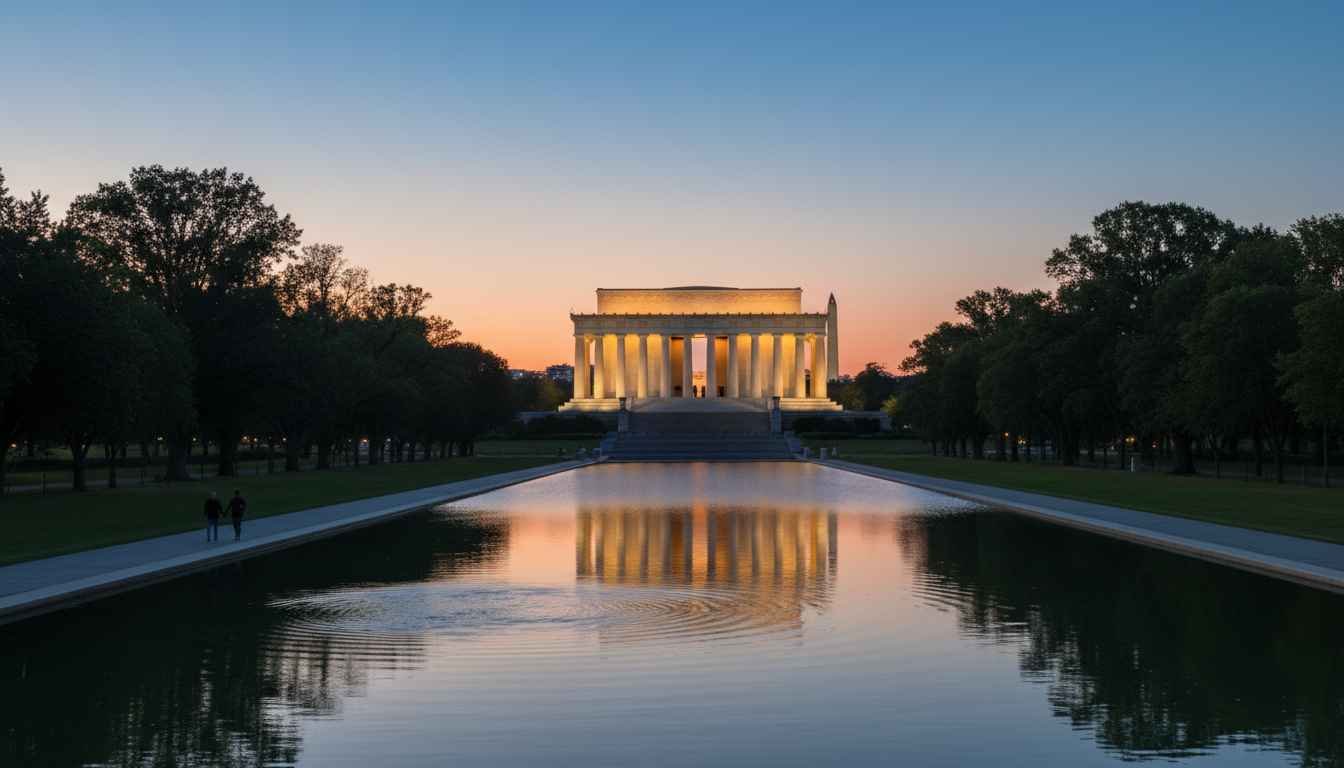
Stand on the steps of the Lincoln Memorial at sunset, the Reflecting Pool stretching ahead of you and the Washington Monument rising in the distance, and you will understand why Washington DC draws first-time visitors back again and again. The city packs world-class museums, powerful memorials, green parks and distinct neighbourhoods into a walkable centre — and most of its headline museums are free.
If you are wondering what are the best places to visit in Washington DC, start with the National Mall, then add museums, parks and one or two neighbourhoods. This guide covers each in turn, so you can plan a trip that fits your interests and your time.
The National Mall: Monuments and Memorials
The National Mall is the spine of a Washington visit. It runs from the Capitol to the Lincoln Memorial, lined with monuments and memorials that repay a slow walk rather than a rushed pass. The Washington Monument, the Lincoln Memorial, the Vietnam Veterans Memorial and the World War II Memorial each tell a different part of the American story, and visiting them on foot — ideally early in the morning or in the evening — gives you space to take them in.
For a fuller picture of the area around the Mall, the guide to places to visit near the White House in Washington DC covers the sights within easy walking distance of the White House itself.
The Smithsonian Museums
The Smithsonian Institution’s museums along the Mall are one of the great free cultural offers anywhere in the world. The National Museum of American History and the National Air and Space Museum are the most visited, but the collection also covers natural history, African American history and culture, art and more, plus the National Zoo a short ride away.
Do not try to see them all. Pick two or three that match your interests, check which need timed-entry passes before you travel, and leave time for the museum shops and cafes — they are part of the experience, not an afterthought. Families should plan around one museum per half-day, with a park break in between.
Parks and Outdoor Spaces
Washington is greener than many visitors expect. Rock Creek Park, just north of the Mall, offers miles of hiking and cycling trails through woodland, while the Tidal Basin is famous for its cherry blossoms in spring and makes a lovely waterside walk in any season. The United States Botanic Garden near the Capitol is a calm, free stop for plant lovers and a good rainy-day option.
Spring is the showpiece season for blossom, but autumn brings mild weather and thinner crowds, and winter offers quieter museums. Summer is hot and humid, so plan outdoor walks for mornings and evenings and museum visits for midday.
Neighbourhoods Worth Exploring
Beyond the Mall, Washington’s neighbourhoods show the city’s everyday character. Georgetown, with its historic streets, waterfront and independent shops, suits a relaxed afternoon of walking, shopping and eating. Dupont Circle offers galleries, bookshops and cafes, while the U Street Corridor is known for its music venues and restaurants.
Each neighbourhood is easy to reach by Metro or on foot from the centre, and an evening in one of them is the quickest way to feel that you have visited a living city rather than just a set of monuments. If you are planning a longer East Coast trip, the top places to visit in Philadelphia, PA make a natural next stop, a short train ride away.
FAQ
How many days do I need in Washington DC?
Three days cover the Mall, two or three Smithsonian museums and one or two neighbourhoods at a comfortable pace. Two days work if you focus on the Mall and one museum cluster; four or five let you add day trips and slower neighbourhood exploring.
Are the Smithsonian museums really free?
Yes, Smithsonian museums and the National Zoo offer free general admission, though some special exhibitions or experiences may charge, and some museums require free timed-entry passes — check before you go.
Is Washington DC suitable for families?
Yes. Free museums, interactive exhibits, parks and the zoo make it one of the most family-friendly city breaks in the United States, especially with a flexible, one-major-sight-per-half-day pace.
Final Thoughts
The best places to visit in Washington DC reward a simple plan: walk the Mall, choose your museums carefully, spend time outdoors in the city’s parks, and finish the day in a neighbourhood. You will leave with a sense of the country’s history and of a city that is much more than its monuments — and with a list of museums you will want to return for.