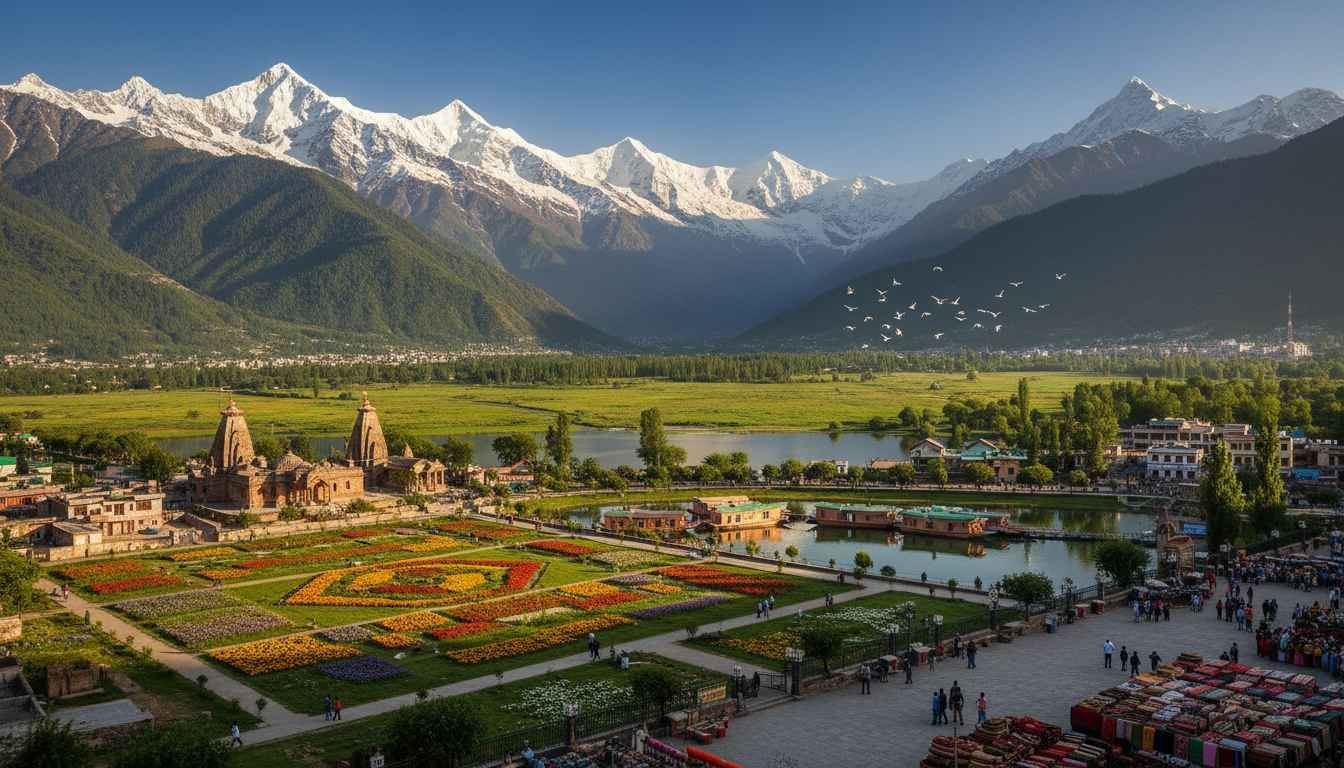
Picture yourself drifting across Dal Lake in a wooden shikara at sunrise, the Himalayas rising behind Srinagar’s houseboats, and you have the first image most travellers carry home from Jammu and Kashmir. But the region is far more than one lake: it holds alpine meadows, Mughal gardens, ancient temples, pilgrimage towns and high mountain passes, all within a day or two’s drive of each other.
This guide covers the best places to visit in Jammu and Kashmir for scenic views and cultural sites, with honest practical advice — including one important caution about checking current travel advice before you go.
Srinagar: Dal Lake, Mughal gardens and the old city
Srinagar, the summer capital, is where most trips begin. Dal Lake is its centrepiece: houseboats moored along the shore, shikara rides between floating gardens, and the Boulevard road running along the water. A morning shikara ride, before the day heats up, is the classic Srinagar experience, and staying a night on a houseboat is worth doing once if your budget allows.
Away from the lake, the Mughal gardens — Shalimar Bagh, Nishat Bagh and Chashme Shahi — are terraced gardens built in the 17th century, with fountains, chinar trees and views back across the lake. The old city, with its wooden mosques, shrines and markets, rewards a slow walk, and Nigeen Lake, quieter than Dal Lake, suits travellers who prefer calm water to crowds.
Gulmarg: meadows, the gondola and winter sports
Gulmarg, about 50 kilometres from Srinagar, is a high meadow town ringed by snow-capped peaks. In summer it is green and open, good for walking, horse riding and golf on one of the world’s highest courses. In winter it becomes India’s best-known ski destination, with the Gulmarg Gondola — one of the highest cable cars in the world — carrying visitors up to Apharwat Peak for skiing and views.
Come in the right season for what you want: December to February for snow, May to September for meadows and walking. Book the gondola in advance in peak season, and dress for altitude even in summer — the air at the top is cold and thin.
Pahalgam and Sonamarg: valleys and rivers
Pahalgam, on the Lidder River, is the gentler of the region’s valley towns: pine forests, riverside walks, and easy access to Betaab Valley and Aru Valley, both popular for day trips, picnics and short hikes. It is also the starting point for the Amarnath Yatra pilgrimage in summer, when the town is at its busiest.
Sonamarg, the “meadow of gold,” sits higher and wilder, on the road toward Ladakh. Its glacial streams, alpine pastures and the Thajiwas Glacier make it a strong choice for a day trip from Srinagar, especially for travellers who want mountain scenery without committing to a multi-day trek. The road beyond Sonamarg crosses the Zoji La pass into Ladakh — check whether it is open before planning that route, as it closes in winter.
Jammu city and pilgrimage sites
The Jammu division, in the south of the region, has a different character: warmer, drier, and centred on temples and pilgrimage. Jammu city is known for the Raghunath Temple and the Ranbireshwar Temple, both important to pilgrims and to visitors interested in the region’s Hindu heritage.
Katra, near Jammu, is the base town for the Vaishno Devi pilgrimage, one of India’s most visited shrines, where millions of pilgrims walk the uphill track to the cave temple each year. Even for non-pilgrims, Katra and the surrounding hills give a sense of the devotional life that shapes much of the region. Patnitop, a small hill station between Jammu and Srinagar, offers pine forests and hiking trails and makes a useful overnight stop on the drive between the two cities.
Lakes and nature beyond Srinagar
Wular Lake, one of Asia’s largest freshwater lakes, lies between Srinagar and the Baramulla road and is a strong spot for birdwatching, particularly for migratory birds in the cooler months. Manasbal Lake, smaller and quieter than Dal Lake, suits a half-day trip for boating and birdlife without the crowds.
For nature-focused travellers, the region’s meadows and forests reward slow travel: an extra day in one valley, a morning walk before the tour groups arrive, and time simply watching the light change on the mountains. That unhurried pace is what most visitors remember best.
Planning your trip: when to go, how to get around, and safety
Spring (March to May) and autumn (September to November) generally bring the most pleasant weather for sightseeing, with clear skies and comfortable temperatures. Summer is busy in the valleys and cooler than the plains, which is part of its appeal; winter suits skiers in Gulmarg but closes some high roads.
Fly into Srinagar or Jammu, then hire a car with a driver for day trips — mountain roads, checkpoints and local driving conditions make this more relaxing than self-driving for most visitors. Allow at least four to five days for Srinagar, Gulmarg and Pahalgam combined, and a week if you want to add Sonamarg and Jammu.
One caution matters more here than in most destinations: security conditions in parts of Jammu and Kashmir can change, and some governments issue travel advice for the region. Check your government’s current travel advice and local news before you book and again before you travel, and follow local guidance while you are there. If you enjoy temple towns on your travels, our guide to places to visit near Puri Jagannath Temple covers another famous pilgrimage centre, and for a different kind of Indian city break, see our guide to places to visit in Udaipur and nearby.
FAQ: Jammu and Kashmir
- What are the main attractions in Jammu and Kashmir?
Srinagar’s Dal Lake and Mughal gardens, Gulmarg’s meadows and gondola, Pahalgam and Sonamarg valleys, Jammu’s temples, and lakes such as Wular and Nigeen.
- When is the best time to visit Jammu and Kashmir?
Spring and autumn generally offer the most pleasant sightseeing weather; winter is best for skiing in Gulmarg, while summer suits the valleys.
- Is Jammu and Kashmir suitable for families?
Yes — houseboats, gardens, gentle valley walks and lake rides suit families well, though high-altitude trips and long drives need planning with children.
- How many days do I need?
Four to five days covers Srinagar, Gulmarg and Pahalgam; a week allows Sonamarg and Jammu as well.
Final Thoughts
Jammu and Kashmir rewards travellers who combine its famous sights with its quieter ones: a shikara at dawn, a meadow walk in Gulmarg, a temple visit in Jammu, and an unhurried afternoon by a lake. Plan around the seasons, travel with a local driver, check current advice before you go, and the region’s mix of scenery and culture will do the rest.